
The Government of Indonesia has pursued national sugar self-sufficiency since 2004; however, this goal has yet to be fully realized. Several challenges hinder its achievement, including the limited availability of nationally superior sugarcane varieties favored by farmers, insufficient supply of high-quality planting material, the decreasing availability of suitable sugarcane land, particularly on Java Island, and the limited adoption of proper cultivation technologies among smallholder sugarcane farmers. These challenges are significant, as sugarcane is highly sensitive to deviations from recommended cultivation practices.
Despite these constraints, the government has reaffirmed its commitment through Presidential Regulation No. 40 of 2023, which targets sugar self-sufficiency for consumption by 2028 and full national sugar self-sufficiency by 2030. High-quality planting material derived from superior varieties or clones remains a key factor in the success of agricultural production, as seeds represent the blueprint for agricultural productivity.
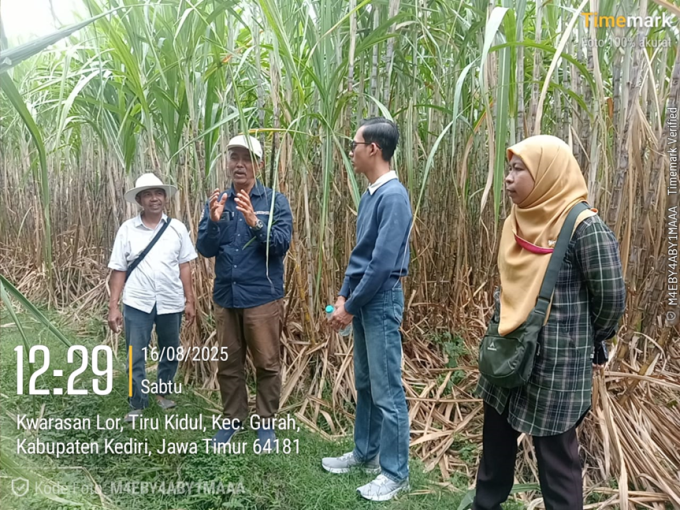
One newly approved superior sugarcane clone is Panjalu 1, officially released through the Decree of the Minister of Agriculture No. 62/Kpts./Kb.010/E/08/2025. Panjalu 1 originated from the careful observation of a sugarcane farmer in Gurah Subdistrict, Kediri Regency, East Java, who identified its potential from the PS881 clone cultivated on his land. This clone demonstrates an average yield of 153 tons of cane stalks per hectare with a sugar recovery rate of 8 percent, resulting in a crystal sugar potential of 12.6 quintals per hectare. Under dryland conditions, yields can reach up to 142.7 tons per hectare. Although classified as a late-maturing clone, Panjalu 1 produces up to 15 tillers that emerge simultaneously during the tillering phase.
If Panjalu 1 gains widespread acceptance among farmers and is cultivated extensively, it is expected to play a crucial role in supporting the achievement of national sugar self-sufficiency. With its exceptionally high productivity, Panjalu 1 holds significant potential to increase national sugar production and contribute to the Sustainable Development Goals, particularly SDG 2 on Zero Hunger, SDG 8 on Decent Work and Economic Growth, and SDG 9 on Industry, Innovation, and Infrastructure. Overall, Panjalu 1 represents not only a new sugarcane variety but also a locally driven innovation that contributes to national sustainable development agendas, particularly in strengthening food security, reducing poverty, and promoting industrial independence.
Author: Prof. Dr. Ir. Taryono, M.Sc.
Editor: Yudha Pria Wibawa
Photo: Taryono