
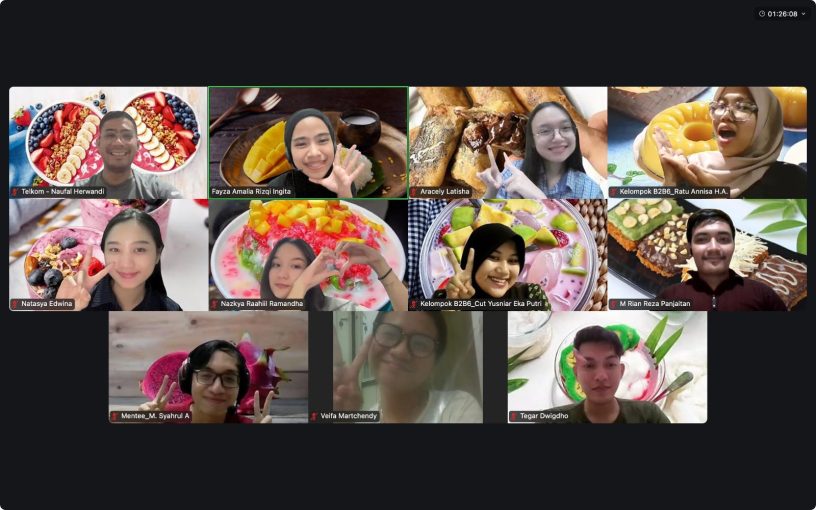
M. Rian Reza Panjaitan, an undergraduate Agronomy student from the Department of Agronomy, Faculty of Agriculture, Universitas Gadjah Mada, was selected as a participant in the Digistar Class Intern (DCI) Program, a digital talent development initiative organized by Telkom Indonesia. The program aims to develop high-quality human resources through intensive training and hands-on work experience across various units within TelkomGroup.
Over a six-month period, DCI participants received direct mentoring from industry professionals and were actively involved in real-world projects across multiple TelkomGroup divisions. In addition to developing technical competencies in areas such as Business to Business services, Cyber Security, Artificial Intelligence, and Cloud Computing, the program also emphasized soft skill development through training sessions focused on self-growth, communication, and career planning.
Throughout the program, Rian engaged in a variety of projects. He was involved in designing a hotel concept complete with facility planning and economic feasibility analysis, as well as developing pitch decks for potential investors. He also gained insights into the importance of maintaining strong client relationships and designing solutions based on customer needs.
Notably, Rian was able to integrate his academic background in agriculture into his internship activities. He explained that his mentor encouraged him to explore the potential of digitalization in agricultural commodities, particularly local crops such as tusan and Gayo coffee from Takengon.
Rian encouraged fellow students not to hesitate in applying for similar programs. He advised students to apply confidently, follow each stage of the selection process carefully, and actively seek guidance from peers or senior students who have previously participated.
Rian’s participation in the Digistar Class Intern Program not only broadened his interdisciplinary perspective but also supported the achievement of the Sustainable Development Goals (SDGs), particularly SDG 4 (Quality Education) through youth competency development, SDG 8 (Decent Work and Economic Growth) through industry-based training, and SDG 9 (Industry, Innovation, and Infrastructure) through strengthening digital capacity and cross-sector innovation, including its potential application in agriculture.
Author: Mareta Aulia Putri
Editor: Yudha Pria Wibawa
Photo: M. Rian Reza Panjaitan