
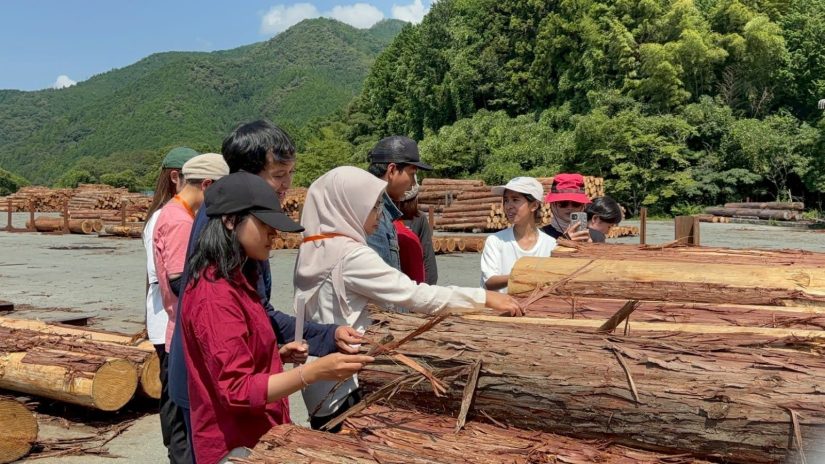
An undergraduate Agronomy student from the Department of Agronomy, Faculty of Agriculture, Universitas Gadjah Mada (UGM), Hanif Falah Nasrulloh, was selected to participate in the international SUIJI Service Learning Program (SUIJI-SLP) 2025 in Japan. The program is a collaborative initiative between universities in Japan and Indonesia that integrates academic learning with community service activities in the field of sustainable agriculture.
Hanif explained that he had prepared for the program well in advance by actively seeking information, discussing with previous participants, and carefully preparing the required documents. He emphasized that early planning, proactive communication, and continuous monitoring of program updates were key factors in the selection process.
Based at Ehime University, Takagawa Site, Shikoku Island, Hanif was directly involved in service learning activities alongside local communities. The program focused on horticultural farming in mountainous areas, particularly involving plum, peach, and chestnut commodities, as well as social studies related to the declining number of young people engaged in the agricultural sector. Through observation, surveys, and discussions with local residents, participants were encouraged to design sustainable solutions tailored to community needs.
Cross-cultural interaction with Japanese students provided valuable insights for Hanif. He learned about discipline, work ethic, and a strong culture of mutual respect. He noted that the emphasis on togetherness and courtesy left a lasting impression, including simple practices such as waiting for all members to gather before meals.
For Hanif, SUIJI-SLP was not only an academic exchange program but also an opportunity to broaden global perspectives and strengthen social awareness. He encouraged other students to take part in similar international programs by preparing early, actively seeking information, and being willing to step outside their comfort zones.
Through his participation in SUIJI-SLP 2025, Hanif gained cross-cultural understanding and academic skills while contributing to the achievement of the Sustainable Development Goals (SDGs), particularly SDG 2 (Zero Hunger) through sustainable agricultural innovation, SDG 4 (Quality Education) through cross-cultural learning, SDG 11 (Sustainable Cities and Communities) through rural community empowerment, and SDG 17 (Partnerships for the Goals) through international university collaboration.
Author: Mareta Aulia Putri
Editor: Yudha Pria Wibawa
Photo: Hanif Falah Nasrulloh